
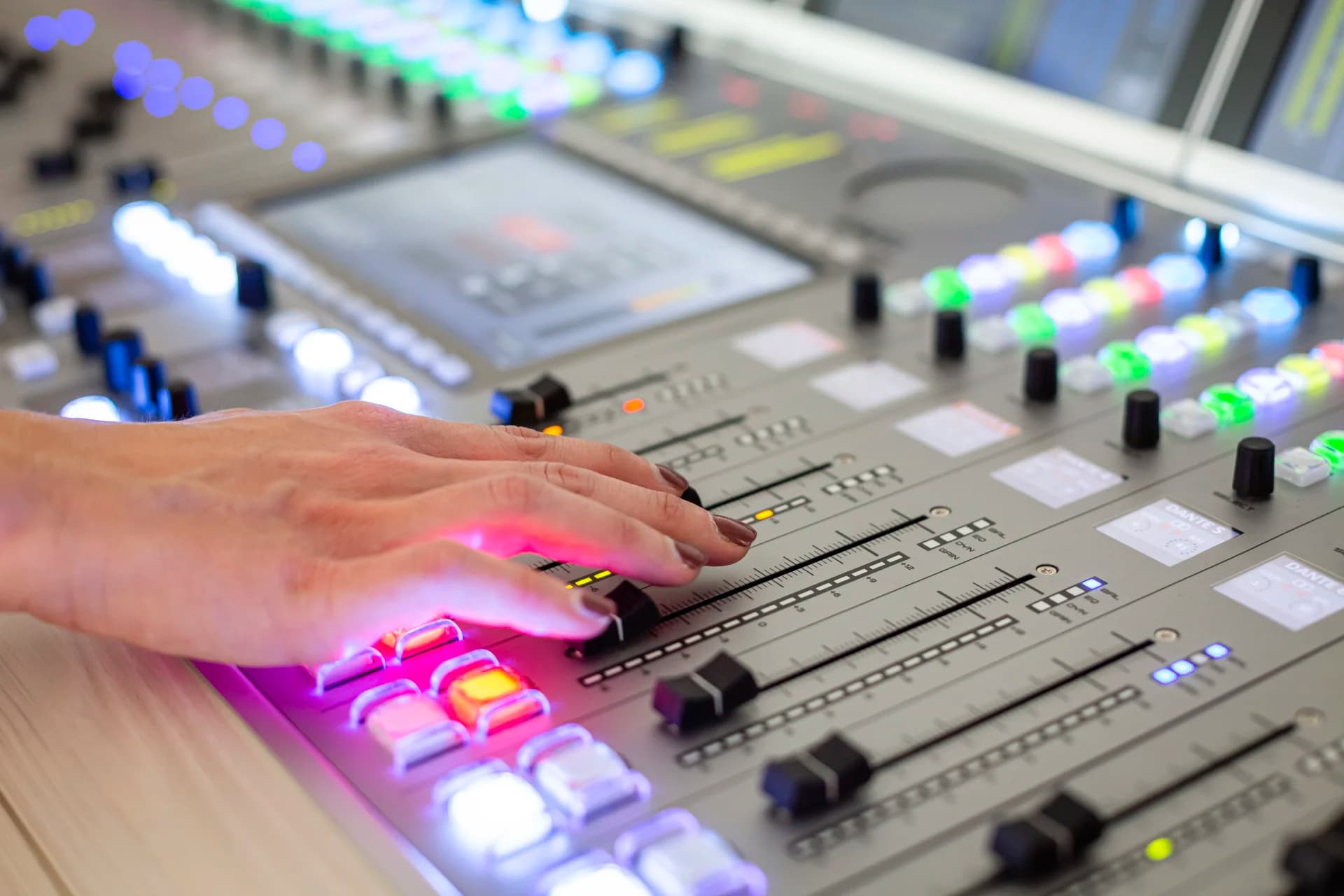


Interested in this product?
Request informationDigital Audio Console for Radio and Television
ATRIUM is a digital audio mixer specially designed for radio and television audio production and broadcasting in the most demanding working environments. It handles up to 1000 channels of local or IP audio controllable through one or several surfaces, each with up to 90 motorized and page-able faders.
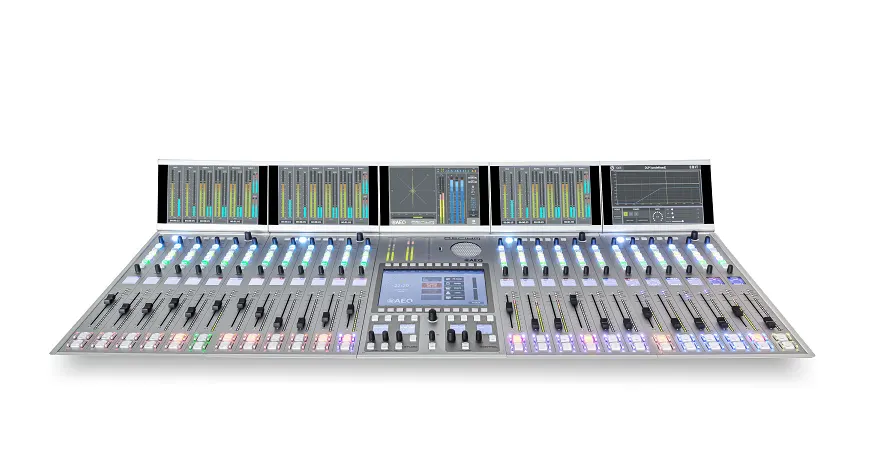
Flexible control surface, independent of the engine
With tools for remote maintenance and operation
Extremely simple to operate

Assisted operation with Autogain and Automix
A single engine controls up to 6 surfaces
Control system and protocols for complementary equipment
Functional Description
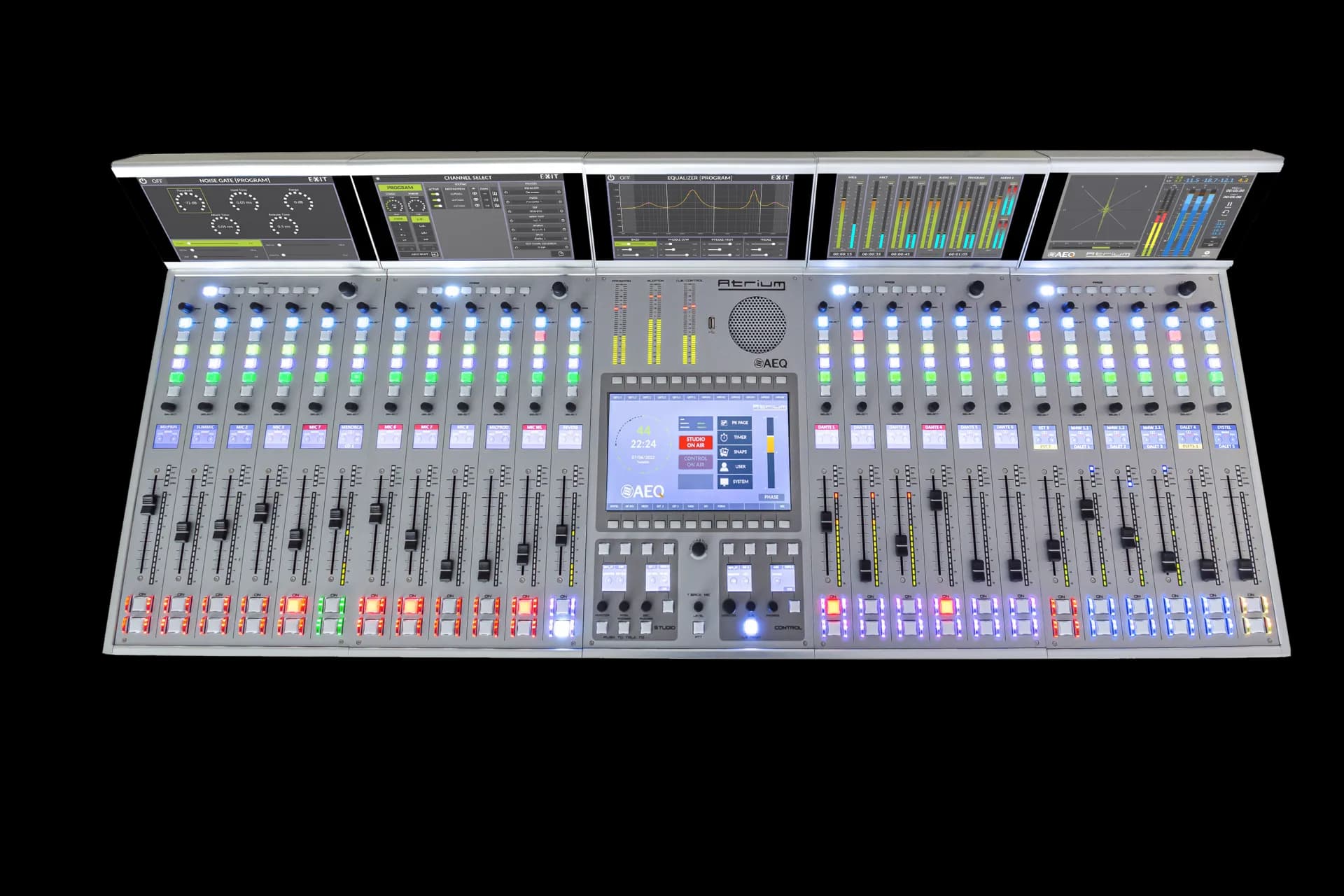
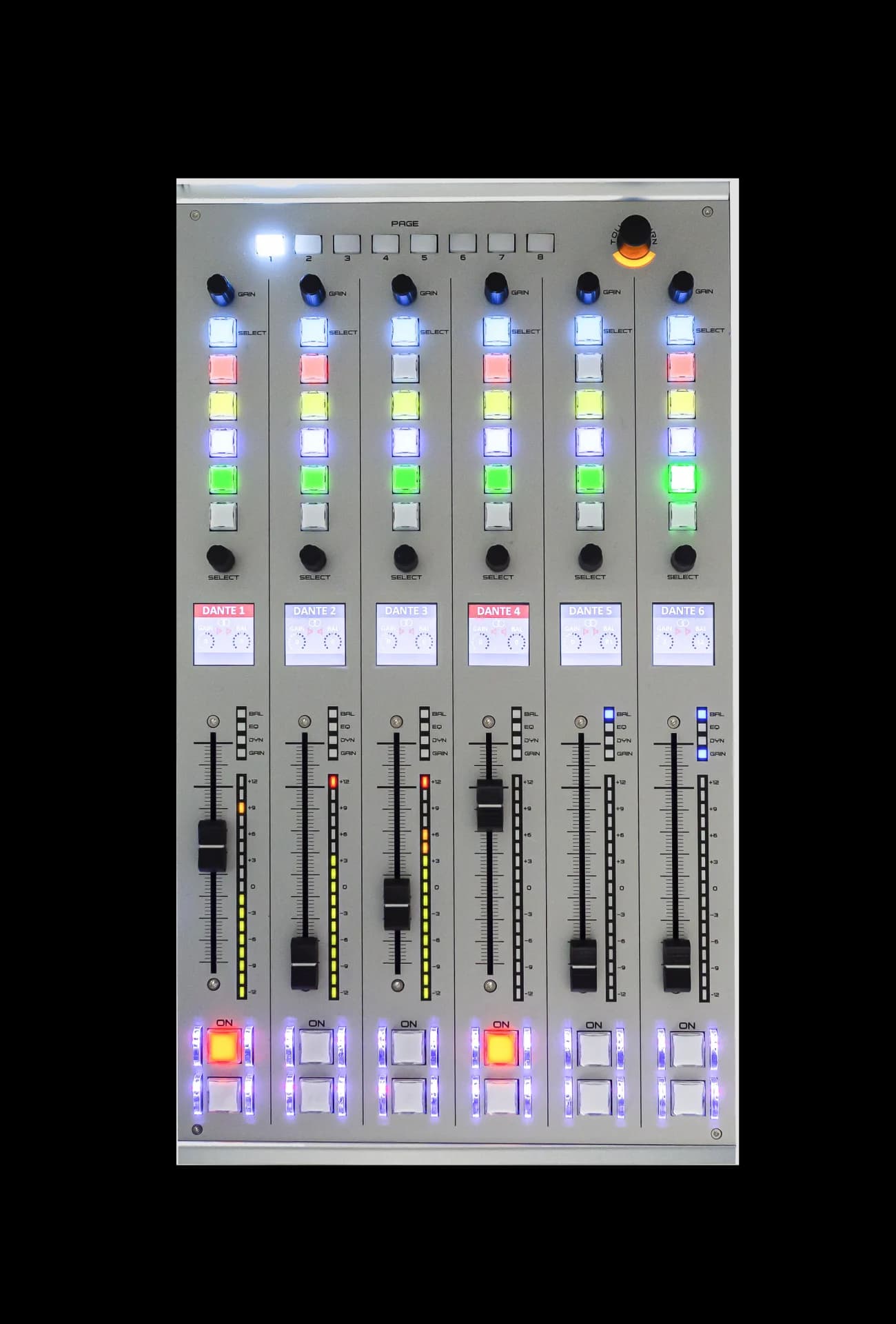
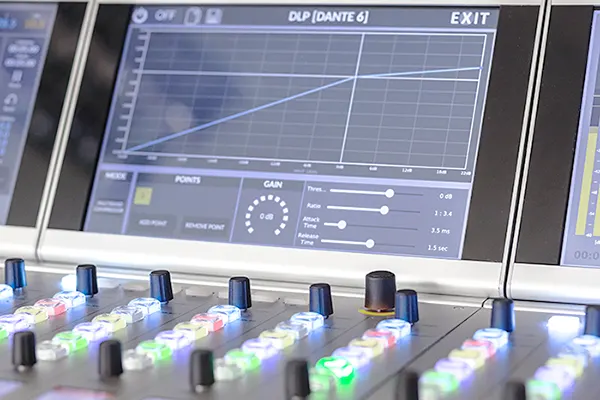
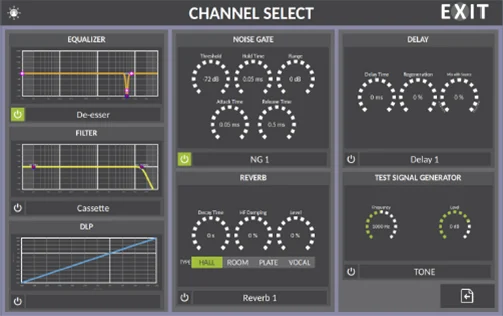
Displays for Fader Modules
Process displays are touch-enabled and allow adjustment by touching the screen, or for greater precision, using the TOUCH & TURN encoder. Equalisation, filter and compression (DLP or Multi-band) processes can be edited directly on the graph or using the virtual faders below it.
Optional Display for the Control Module
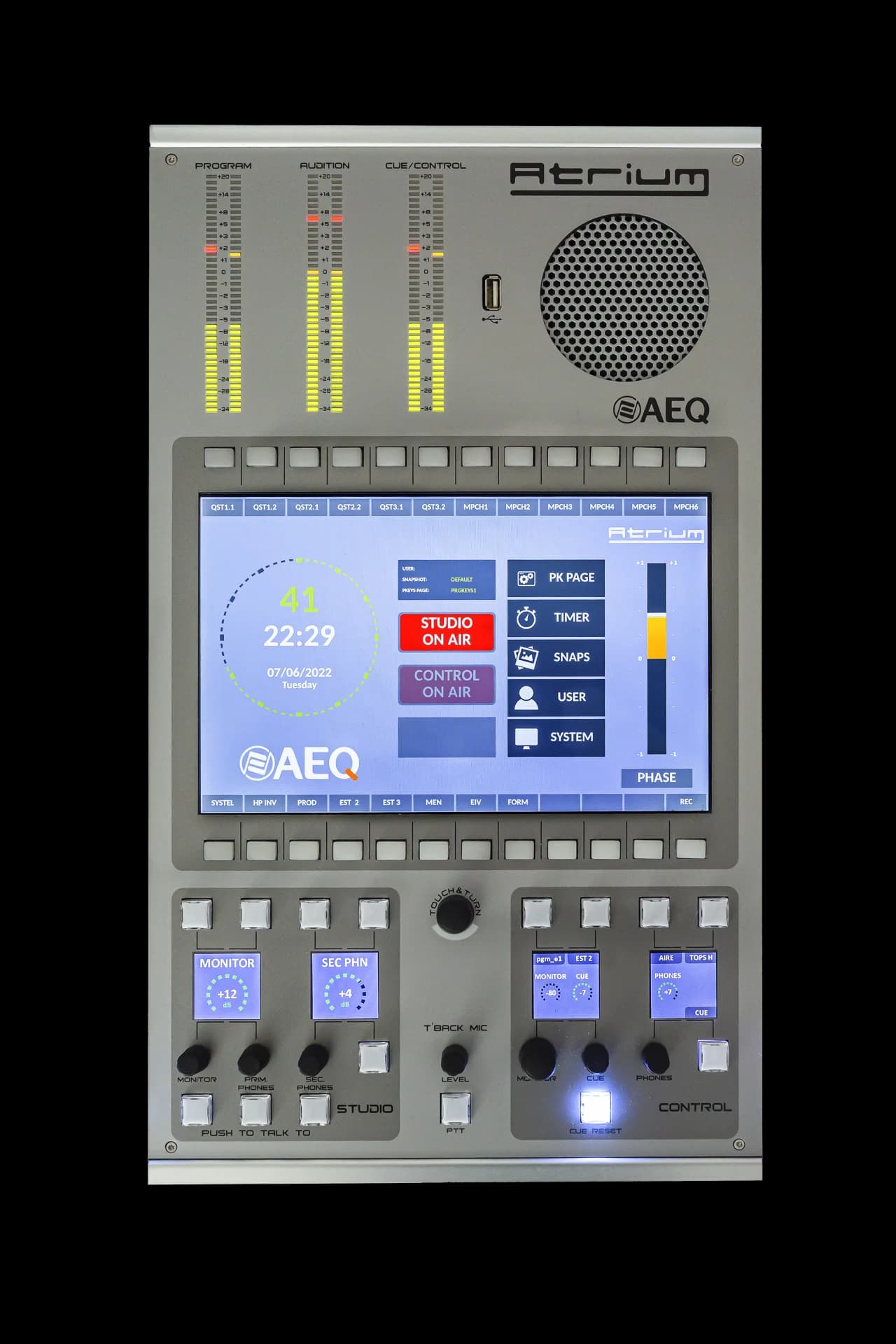
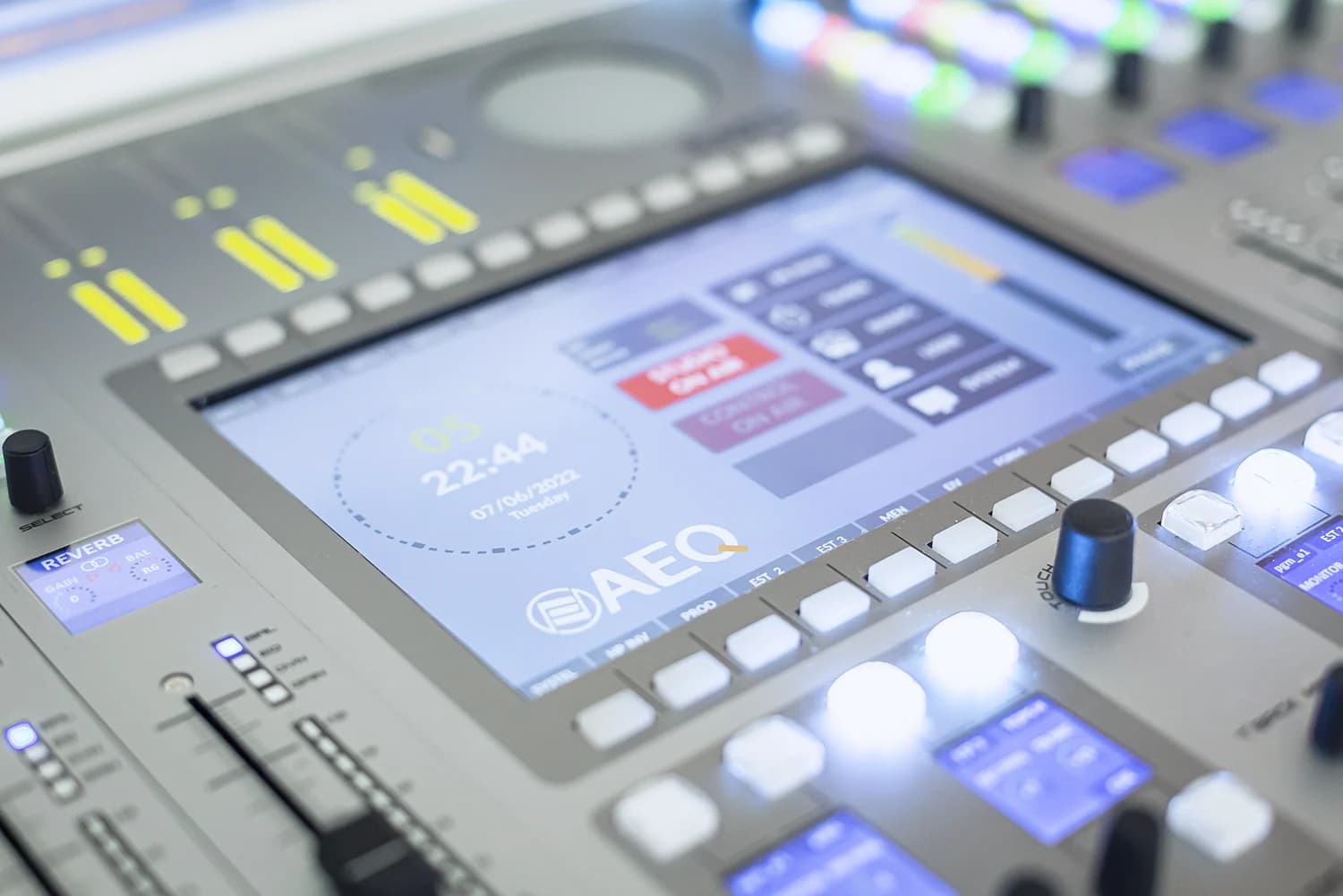
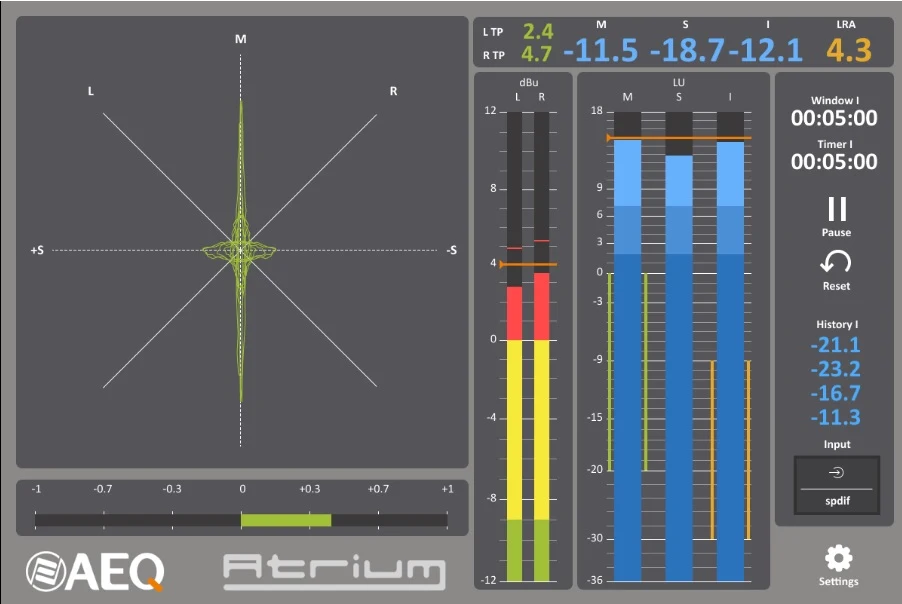
An optional TFT display module associated with the control module allows incorporating the measurements required in the most demanding work environments: spatial phase measurement and Loudness measurement in accordance with EBU R128. Allows selection of the signal to be measured and receives it via a Dante link.
State-of-the-art technology and innovative features
PDFCatalogX_CORE Audio Engine
It is an audio matrix, mixer, processor and distributor for broadcast. It works as the engine for one or a set of ATRIUM consoles, and can also function as a general-purpose audio matrix, an intercom matrix, or with combined functionalities.
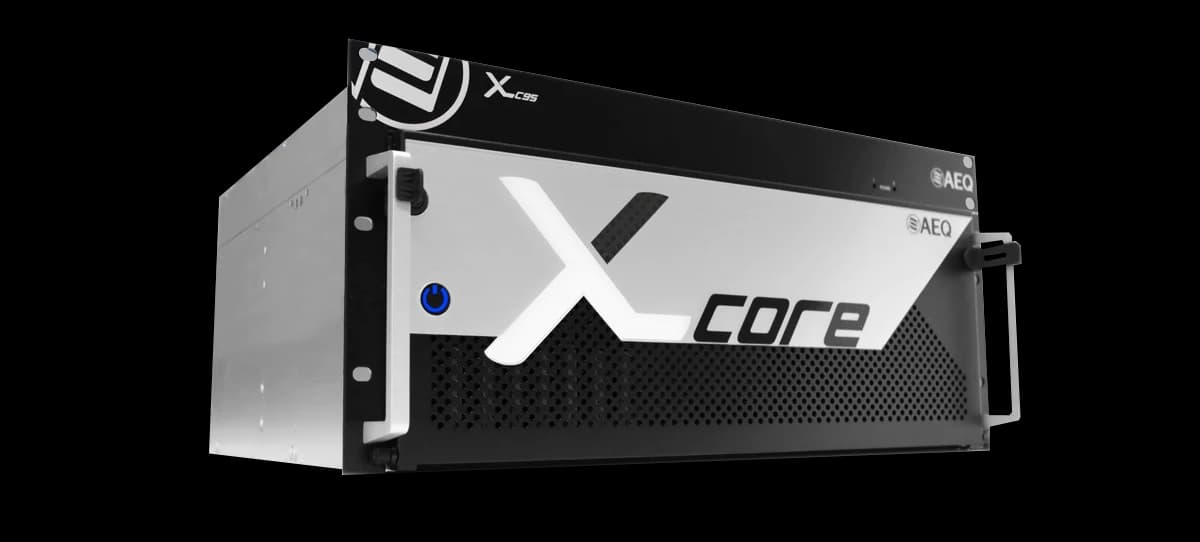
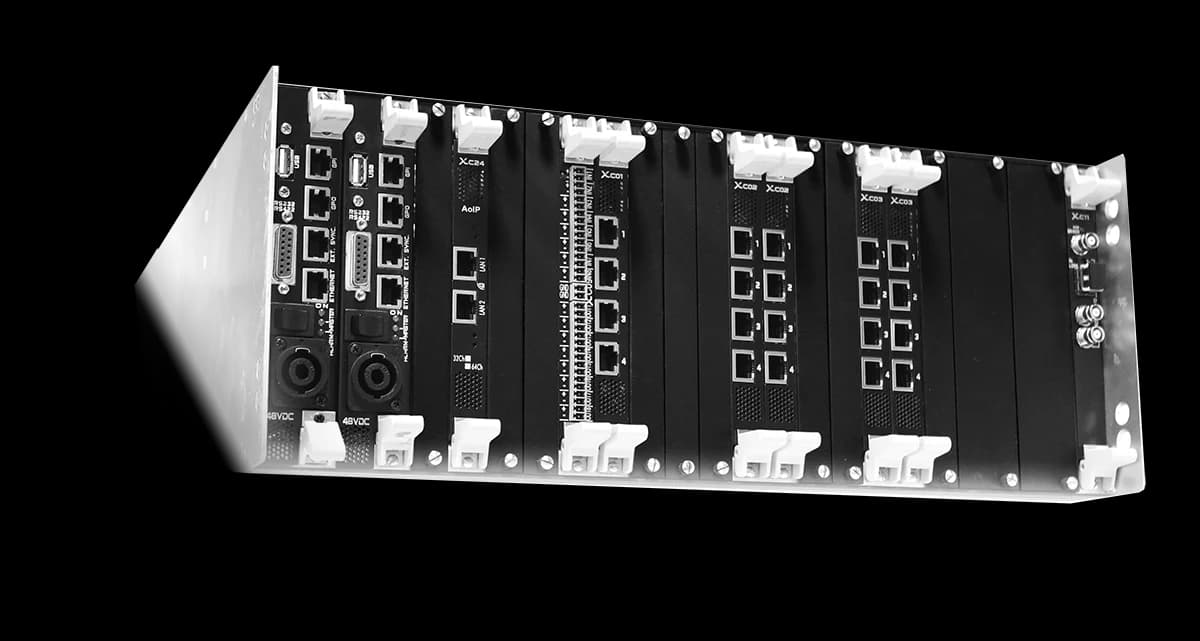
X_CORE for Atrium can handle up to 1,024 audio inputs and outputs depending on configuration.
Fully modular and redundant: controller, DSP cards and power supply.
Inputs and outputs: AES/EBU, analogue line, microphone, headphones and MADI, among others.
64-channel AoIP Dante/AES67 cards add external IP audio inputs and outputs.

External IP audio I/O can be added via RAVENNA, SMPTE ST 2110-30 and SMPTE ST 2110-31 protocols.
Dual SDI cards add inputs and outputs for extracting and re-embedding audio in SDI signals.
Configuration Software
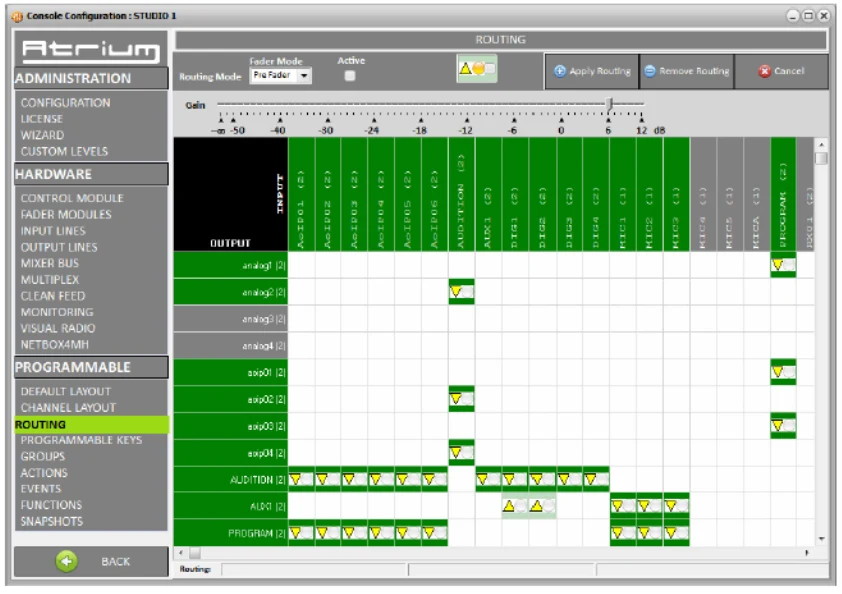
ATRIUM Setup – Configuration Software
Includes a wizard for quick console configuration, specifying the number and type of inputs and outputs required. The software is fully configurable and allows you to specify the number and type of mix buses, input channels, processing to apply to each console channel, output routing, and more.
Remote Control Software
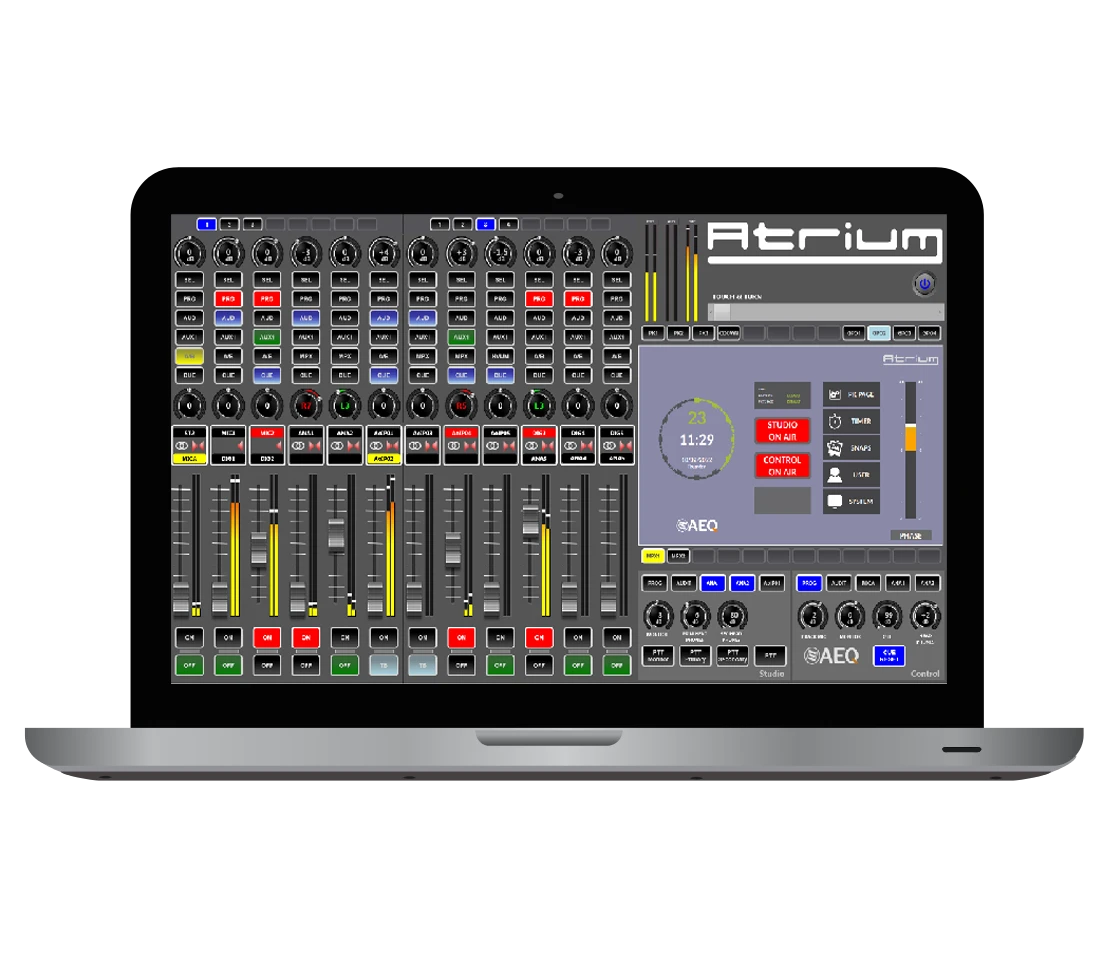
ATRIUM Virtual – Remote Control Software
The full functionality of the physical control surface is available in this software application. Easy operation of switches, rotary encoders, displays and faders.
Technical Details
General
- Modular design in surfaces and engine.
- Multi-surface: up to 6 consoles or control surfaces per engine.
- Internal sample rate 48 kHz at 24 bits. Internal 32-bit bus.
- Control communication via redundant 10/100/1000 Ethernet connection using TCP/IP protocol.
- Time synchronisation via NTP. Synchronism input via WORDCLOCK or AES11. Also accepts synchronism from AES10 MADI links, AEQ Multichannel, DANTE (PTPv1-2002 and PTPv2-2008, IEEE 1588), and RAVENNA links (PTPv2-2008, IEEE 1588).
- Modular design allowing the number of inputs and outputs to be tailored to each installation. Hot-swappable modules without affecting the functionality of the remaining equipment.
- Redundancy: Automatic switchover on failure or removal of DSP and controller cards.
- Redundancy: Redundant power supply in each surface module and in the engine.
- Redundancy: Redundant IP audio connections.
- Redundancy: Remote control application can work in parallel with the surface.
- Selectable auto-start with last settings or default configuration.
- Radio frequency protection.
Surface
- Channels with 6 motorised 100 mm conductive-plastic faders with capacitive sensor.
- Audio gain adjustment for all signals, including hidden ones. Selectable balance/pan control for all channels. Selective phase inversion.
- Additional microphone input for talkback and self-monitoring, and integrated headphone output in each control module. Dante IP connectivity with the engine.
- CUE output with built-in speaker on the control surface.
- USB input on the control surface.
- 3 precision physical stereo VU meters, and one +/- 12 dB presence VU meter per channel.
- Physical control headphone output on the control and monitoring module.
- Independent control on each control surface for control and studio monitors and control headphone outputs, primary and secondary studio.
- Test tone generators: adjustable frequency and level tones, pink and white noise.
- Different user levels with associated password, up to 31 levels. Defaults: administrator, operator and basic.
- Cough cut, ON-AIR signalling for studio and control, fader-start, remote PFL, talkback, automatic monitor cut. Configurable monitoring for all system signals.
- Direct routing with keys on each channel.
- Signals assignable to any control channel.
- Flexible logical signal grouping: mono, stereo and multichannel signals.
- Flexible configuration of practically unlimited internal MPX buses.
- Up to 128 VU meters transmitted via IP, viewable on console displays and on remote PCs via an application.
- Linear phase meter.
- Optional module with spatial phase meter and EBU R128 loudness measurement.
- Externally synchronisable clock, timer and stopwatch.
- Control of external equipment (AEQ hybrids and audiocodecs) integrated in the programmable keys section.
- IP output of level measurement for selected sources for Visual Radio.
- Storage in non-volatile RAM of all signal settings: up to 128 memory positions available.
- Processing of system audio signals. Processing capacity depends on the number of processing cards installed. All audio processes are predefined but always allow manual real-time adjustment and storage in system non-volatile memories.
- Implemented processing types: 4-band parametric equaliser.
- Implemented processing types: High-pass, low-pass, band-pass filter.
- Implemented processing types: Compressor, limiter, expander, noise gate, DLP mixed dynamics processor, multiband compressor.
- Implemented processing types: Delay.
- Implemented processing types: Reverb.
- Implemented processing types: Combined process with De-Esser function.
- AUTOMIX and AUTOGAIN on any of the signals.
- One or more control modules: 261 mm wide × 431 mm deep × 83 mm high.
- Up to 16 modules of 6 faders: 261 mm × 431 mm × 83 mm.
- Additional display modules for the fader module or control module: 261 mm wide × 126 mm deep × 150 mm high.
- The surface is powered via optionally redundant PoE+.
Engine
- Maximum capacity for Atrium: 1,024 inputs and 1,024 outputs.
- Electronically balanced microphone and line inputs. Analogue headphone outputs.
- Electronically balanced analogue line inputs and outputs. Transformer-balanced analogue line I/O option available.
- Digital inputs/outputs configurable as: AES/EBU (AES3) and SPDIF, mono and stereo.
- Digital inputs/outputs groupable according to AES10 (MADI), mono and stereo, one or two 64-channel interfaces, 48 kHz, single-mode or multimode fibre with SFP receptacles and removable cartridges.
- IP audio inputs/outputs, G.722-compressed for intercommunication, 12 channels per card.
- IP audio inputs/outputs, Dante protocol, AES67 and SMPTE ST 2110-30 compatible, 64 channels per card, 48 kHz.
- IP audio inputs/outputs, RAVENNA protocol, AES67, SMPTE ST 2110-30 and SMPTE ST 2110-31 compatible. NMOS control. 128 channels per card, 48 kHz.
- Audio inputs/outputs embedded in SDI digital video up to 3G according to SMPTE 259M, 292M and 424M standards. Cards with two input and 2 output interfaces with 2×16 audio inputs and 2×16 audio outputs.
- GPI and GPO (General-purpose inputs and outputs for special applications): Via optocoupler on some I/O cards.
- GPI and GPO (General-purpose inputs and outputs for special applications): GPI via optocoupler and GPO via relay on controller cards.
- One or more 4U×19″ frames depending on configuration.
- Dual TDM bus.
- 21 slots for I/O cards installed according to the technical requirements at any given time.
- 2 slots for redundant controller card with real-time QNX operating system.
- 20 slots for processing cards.
- External redundant power supply.
Downloads
Catalogs and technical documentation available for ATRIUM.